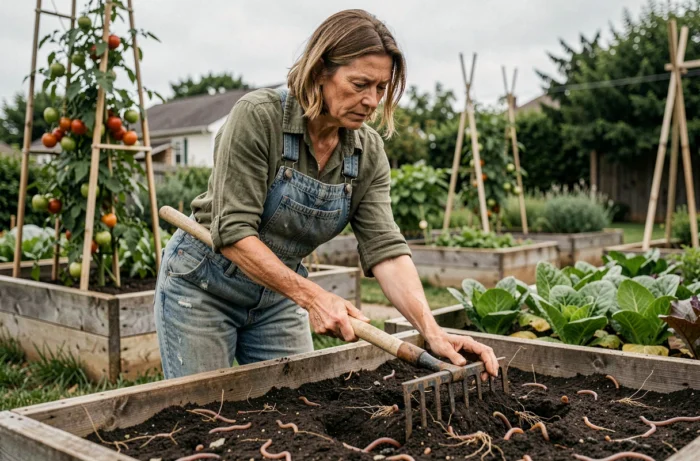
The grelinette aerates the soil without turning it over, which distinguishes it from the traditional spade and the tiller. However, not all soils require the same treatment, and a systematic pass each season may prove unnecessary, even counterproductive. Comparing the actual effects of this tool on different types of soil helps to better understand when and how to use it in the vegetable garden.
Grelinette, spade, and tiller: compared effects on soil life
The choice of a soil working tool is not just a matter of comfort. Each method acts differently on the structure, fauna, and fertility.
| Criterion | Grelinette | Traditional spade | Tiller |
|---|---|---|---|
| Turning of layers | No (vertical lifting) | Yes (complete inversion) | Yes (grinding and mixing) |
| Preservation of microorganisms | High | Low | Very low |
| Risk of plow pan | Low | Moderate | High (compaction below the working depth) |
| Physical effort (back) | Reduced (lever effect from the handles) | High | Variable (vibrations, weight) |
| Suitable for permanent beds | Yes | Yes | Difficult (width, bulk) |
The grelinette preserves the layers of soil in their natural position. Anaerobic organisms remain deep, while aerobic ones stay on the surface. This maintenance of stratification promotes the continuous transformation of organic matter into humus.
The tiller, on the other hand, pulverizes the crumb structure and destroys a significant part of the mycorrhizal fungal network. In clay soil, repeated passes of the tines can create a compact plow pan just below the working depth.
Specialized resources like grelinette-warrior.com detail the technical characteristics of the different models available, which helps in choosing a tool suited to the nature of one’s land.
Soil diagnosis before using the grelinette: avoid unnecessary intervention
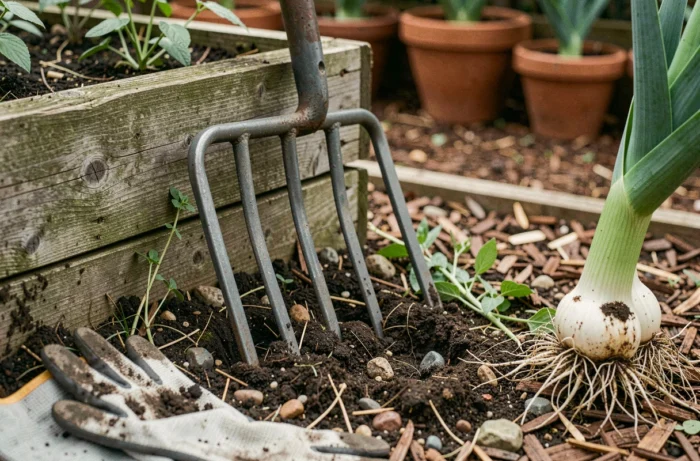
A well-structured soil does not need to be aerated every year. Earthworm galleries, decomposed fine roots, visible crumb structure, rapid infiltration of watering: these signs indicate a living soil that works on its own.
Using the grelinette out of calendar habit, for example every autumn, disrupts an already functional balance. The tool responds to observed compaction, not to a seasonal routine.
The clod test to assess moisture
The moisture of the soil conditions the effectiveness of the work. On waterlogged soil, the tines of the grelinette smooth and compact instead of loosening. A simple test consists of taking a clod and observing it: if it shines and sticks to the fingers, the soil is too wet to be worked. The clod should crumble under slight pressure for the intervention to be beneficial.
Locate the compaction rather than working the entire bed
Compaction rarely manifests uniformly. It often affects traffic areas, edges of beds, or places where containers have been placed. Working only the area and depth concerned is sufficient in most cases.
Inserting the grelinette at several points on the bed allows you to identify where the resistance is abnormal. If the tines penetrate easily across the entire surface, a complete pass is unnecessary.
Grelinette and clay soil: adapting the technique to the terrain
Clay soils present a particular challenge. Their fine structure retains water and compacts quickly under the effect of trampling or rain. The grelinette is particularly useful here, but its use requires specific precautions.
- Intervene when the soil is dried out (neither dry enough to form hard clumps nor wet enough to stick). The suitable window sometimes lasts only a few days in spring and autumn.
- Prefer a model with spaced tines to limit resistance. On heavy clay, wider spacing between the tines reduces effort and avoids creating layers of compacted soil between each tine.
- Complement mechanical work with the addition of organic matter (compost, decomposed mulch) that improves porosity in the long term. The grelinette loosens, but only organic matter maintains the structure over time.
On sandy or loamy soil, the grelinette penetrates easily. The risk of compaction is lower, and a light pass at the beginning of the season is usually sufficient to prepare the bed.
Number of tines and working width: concrete selection criteria
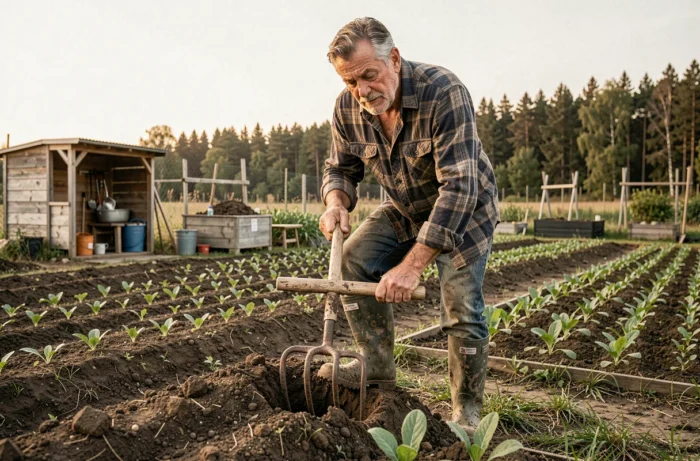
Grelinette models mainly vary by their number of tines and the length of their handles. These two parameters determine the working width and the effort required.
| Number of tines | Approximate working width | Suitable terrain |
|---|---|---|
| 3 tines | Narrow | Small beds, heavy soil, small gardener |
| 4 tines | Medium | Versatile use, loose to semi-compact soil |
| 5 tines | Wide | Large beds, light soil, experienced gardener |
The more tines there are, the greater the lever effort. A 5-tine model covers more surface per pass but requires more force on compact soil. For clay soil, a 3 or 4-tine model remains more manageable.
The length of the handles also plays a direct role in comfort. Handles that are too short require bending, which negates the ergonomic advantage of the tool. Handles reaching shoulder height allow a rocking motion without straining the lower back.
Grelinette and permaculture: a tool, not a one-size-fits-all solution
In permaculture, the grelinette fits into a logic of minimal soil work. It prepares a bed before the first cultivation or intervenes occasionally after accidental compaction. It does not replace permanent mulching, green manures, or crop rotation.
A well-mulched permanent bed eventually no longer requires a grelinette at all. The soil fauna, the roots of cover crops, and the regular addition of organic matter maintain sufficient porosity without mechanical intervention.
The grelinette is therefore more of a transitional tool than a routine tool. It corrects a structural flaw; it does not create fertility. Relying on soil biology remains the most sustainable strategy for a productive vegetable garden season after season.