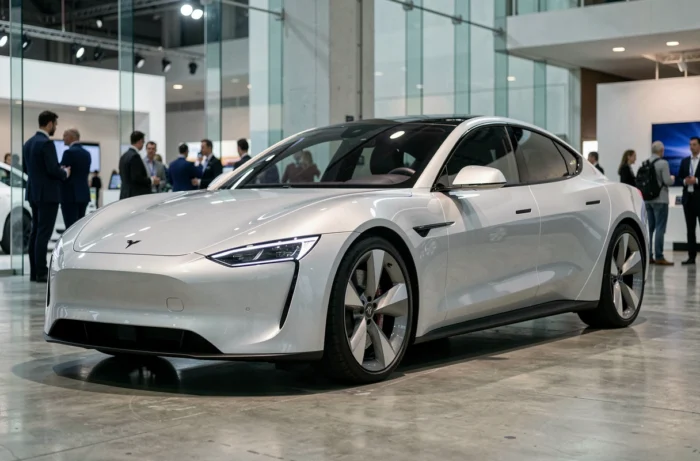
2026 marks a technical turning point for the automotive and motorcycle industries, driven less by announced performance figures than by the real-world conditions for bringing new products to market.
The Euro 7 standard, now in force for new models, broadens environmental assessments beyond exhaust emissions alone: it includes particles generated by brake wear, including on electric vehicles, and sets battery durability requirements. This regulatory framework redefines what manufacturers must prove before they can market a vehicle.
Euro 7 and vehicle type approval: what manufacturers must prove in 2026
Until now, emissions standards have focused primarily on pollutants coming out of the exhaust pipe. Euro 7 changes that approach. An electric vehicle, which emits no CO₂ during use, must now meet criteria for brake particles and battery longevity.
This has a direct consequence: a model may boast impressive performance on paper yet fail to obtain type approval if it does not meet these new criteria. The implementation timelines differ between the European Union and Great Britain, complicating model-range planning for manufacturers operating on both sides of the Channel.
Meanwhile, on November 4, 2026, the European Parliament’s Committee on the Environment adopted a proposal to amend CO₂ targets for cars and vans, introducing credit mechanisms linked to low-carbon steel and certain electric vehicles manufactured in the EU.
The text, still at the parliamentary proposal stage, was due to be put to a plenary vote in December 2026. The rules of the game are therefore still evolving, even for companies already committed to the transition. As Webcarnews on Auto Maniacs explains, these regulatory changes weigh just as heavily as the technology itself on the sector’s pace of innovation.
Automotive cybersecurity: a regulatory hurdle still underestimated
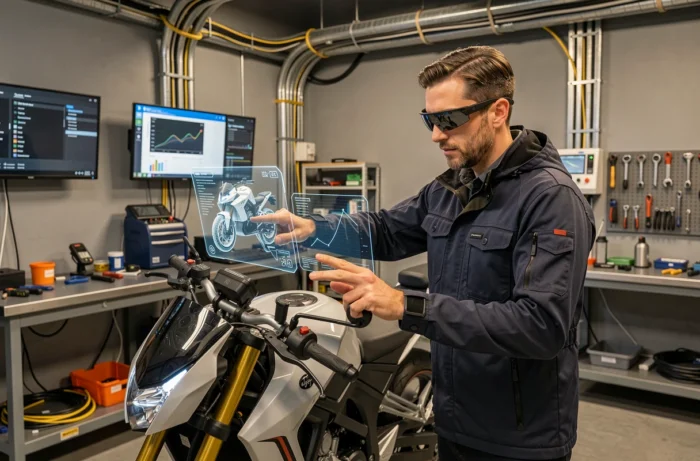
Modern vehicles contain tens of millions of lines of code. Connected models receive software updates remotely (OTA, or over-the-air), making it possible to add features or fix vulnerabilities after sale. This software architecture turns the car into an evolving digital platform.
The downside: every connection point represents a potential attack surface. Cybersecurity and software updates are becoming concrete type-approval issues. Regulatory proposals are in the works, with a review scheduled ahead of a vote in March 2027. These are not yet final rules, but the message is clear.
For motorcycle manufacturers, the challenge is similar. Connected dashboards, integrated navigation and driver-assistance systems are becoming increasingly common on high-end models. A connected two-wheeler raises the same cybersecurity concerns as a saloon car, often with more limited computing resources.
What cybersecurity means for buyers
A vehicle whose manufacturer cannot guarantee the security of its updates may no longer receive type approval for future versions. Buyers should therefore check the manufacturer’s software support policy, just as they would the mechanical warranty.
Charging infrastructure: the bottleneck for electric mobility
Battery technology is advancing. Research into solid-state batteries points to substantial gains in range and charging times. But an electric vehicle’s performance is not measured by its spec sheet alone: it also depends on the network that powers it.
Charging infrastructure is also under regulatory scrutiny in 2026. Public authorities are no longer simply subsidizing the installation of charging points: they are beginning to regulate their interoperability, accessibility and reliability. Automotive innovation is becoming a matter of coordinating networks, not just designing vehicles.
- Charging-point interoperability remains inconsistent across operators, creating friction for drivers on long-distance journeys.
- The reliability of public charging points (availability rates and maintenance) affects the confidence of buyers weighing up electric and hybrid vehicles.
- Rural areas are lagging behind motorways and urban centres in the rollout of charging infrastructure, limiting adoption among part of the population.
Autonomous vehicles and onboard AI: between technical promise and real-world driving
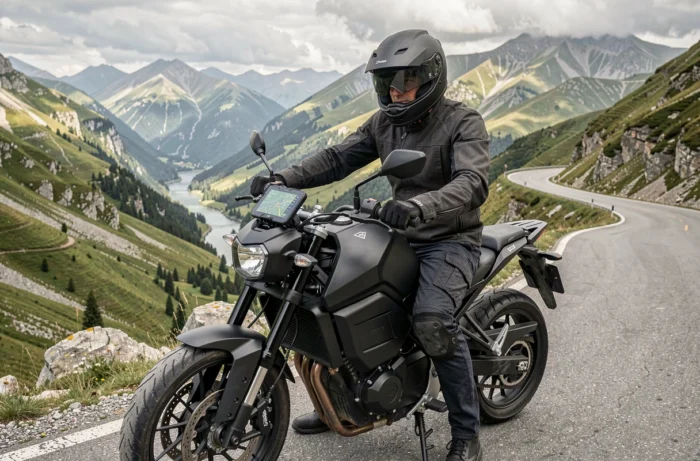
Level 2 driver-assistance systems (assisted acceleration, braking and steering, but under human supervision) are becoming commonplace. The move to Level 3, where the vehicle takes over driving in certain conditions without driver intervention, remains limited to a handful of models and tightly controlled situations (motorways, reduced speeds).
Onboard AI is advancing faster than the legal framework governing its use on public roads. A manufacturer may have a system technically capable of handling complex situations, but the lack of harmonized regulations is holding back its commercial rollout. Type-approval rules, liability in the event of an accident and insurance all remain unresolved issues.
Software personalization and business models
Artificial intelligence is not limited to driving. It also powers cabin personalization: automatic comfort settings, route suggestions and interface adjustments based on the driver’s profile. Some manufacturers are exploring subscription models to unlock software features after purchase, raising questions about the vehicle’s residual value and the long-term availability of services.
- A vehicle with features that depend on an active subscription may lose resale value if the service is discontinued.
- Collecting data for personalization raises privacy concerns that national regulations address inconsistently.
- The “vehicle as a service” business model redistributes margins among manufacturers, software publishers and telecom operators.
The automotive and motorcycle innovations announced for 2026 are technically ambitious. Their actual presence on the roads will depend less on engine power or cell energy density than on three concrete hurdles: Euro 7 type approval and its extensions, the maturity of the charging network, and a cybersecurity framework still being drafted. The vehicle of tomorrow is being built as much in regulatory offices as in R&D centres.