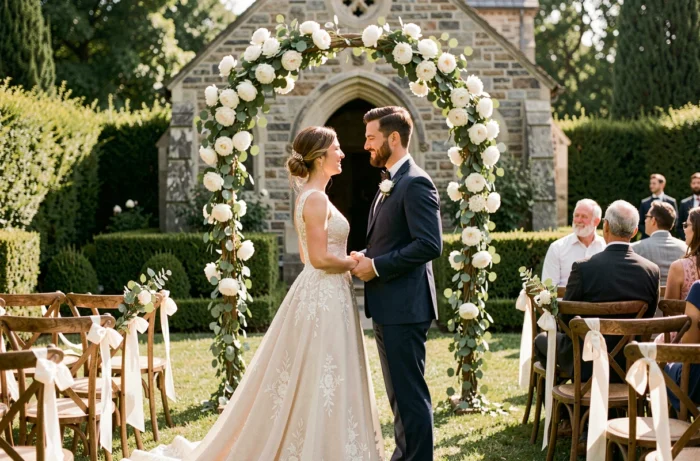
A wedding is about more than choosing a dress and a caterer. Before you even think about decorations or the playlist, two constraints come into play: the municipality where the civil ceremony will take place and whether the reception venue is genuinely accessible to all your guests. Ignore these, and you’re building your schedule on shaky ground. Organizing a memorable wedding means anticipating the different needs of every guest—from limited mobility to unpredictable weather—well before the big day.
Administrative requirements for civil weddings in France
Think you can get married at any picturesque town hall? In reality, your choice is restricted. In France, the wedding must take place in a municipality where at least one of the future spouses has a lasting connection: a home, continuous residence, or a parent’s home. Simply having been born in a municipality is not enough.
Contact your chosen town hall several months in advance. They’ll tell you which documents you need to provide based on your circumstances. One detail that often goes unnoticed: a birth certificate’s validity is calculated from the date the application is submitted, not the wedding date. So if you request one too early, it may expire before your application is even complete.
Some town halls can access civil records directly from the municipality where you were born, making the process easier. Others require the original document. The only way to find out is to ask at the outset. This unglamorous administrative work determines everything else: without a confirmed date at the town hall, no vendor can be firmly booked.
To find vendors in one place and compare the options available near your ceremony venue, try this useful resource: https://instant-mariage.com.
Another point to keep in mind: a symbolic ceremony has no legal standing. Even if you’re planning a symbolic celebration at a château or in a garden, you’re still required to appear before a civil registrar. So plan for two separate events, each with its own schedule and travel arrangements.

Reception venue accessibility: more than just an entrance ramp
When people talk about accessibility, they often think of a ramp at the entrance. There’s much more to consider. A wedding may bring together three generations, each with very different needs: wheelchair access, hearing difficulties, or age-related fatigue.
Consider the entire route your guests will take, not just the entrance to the venue. Ask the venue specific questions:
- Are the routes between the parking area, ceremony room, restrooms, and cocktail area accessible by wheelchair or with a cane?
- Are accessible restrooms close to the main room, or on a different floor?
- Does the venue offer a hearing loop or assistive listening system for speeches and the ceremony?
- Can you review the venue’s public accessibility register before booking?
Any establishment open to the public must have this register. Ask to see it. It provides information about actual access conditions and the services available. Booking a venue without checking these details risks making things difficult for some of your loved ones on the big day.
Outdoor ceremonies and a bad-weather backup plan
A ceremony in a park or garden creates a unique atmosphere. But the weather in France is unpredictable, even in summer. The usual response is, “We’ll see on the morning.” That’s not a plan—it’s improvisation.
A proper backup plan should be agreed with the venue in advance. In practice, that means identifying a covered space on-site that can accommodate the same number of guests and has the same sound setup. This should be clearly stated in the contract or in written correspondence with the venue.
Why is this so often overlooked? Because no one wants to think about rain while planning a wedding. The problem arises at 7 a.m., under a gray sky, when chairs, a floral arch, and sound equipment have to be moved in a panic. With a formalized backup plan, the switch can be made in under an hour, without the stress.
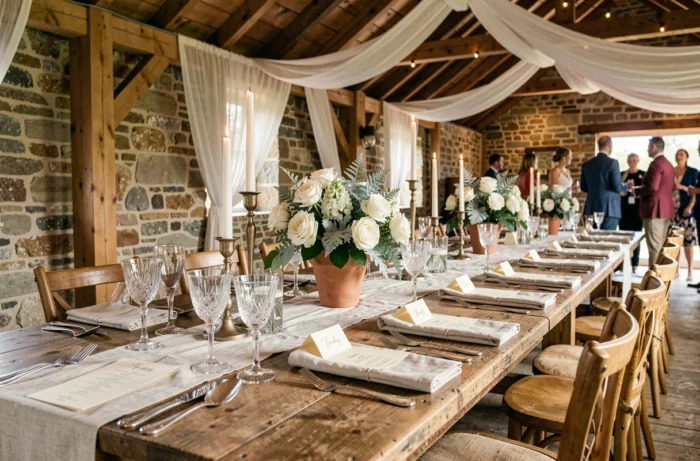
Checklist to review with the venue
Before signing, make sure you’ve discussed these points with the venue manager:
- Covered backup space: capacity, layout, and power access for sound equipment
- Deadline for deciding to move indoors (the night before, the morning of?)
- Who is responsible for setting up the alternative space: the venue team, your decorator, or you?
These details may seem minor during a site visit. They become critical on your wedding day.
Budget and vendors: prioritize instead of piling on
It’s tempting to hire more and more vendors to cover every aspect of the wedding: photographer, videographer, DJ, florist, caterer, wedding planner, calligrapher, midnight food truck. The list grows quickly, and so does the budget.
Three well-chosen vendors are better than eight who aren’t well coordinated. Focus your budget on what matters most to you. If music is your priority, invest in a live band rather than splitting the money between an average DJ and extra decorations.
A quality meal served smoothly will leave a stronger impression on guests than spectacular decorations they walk past without stopping. Always ask for an itemized quote that includes additional costs: travel, setup, overtime. Budget overruns rarely come from the main expense, but from extras you didn’t plan for.
One final practical point: only confirm your vendors in writing once the date has been confirmed by the town hall. Paying a deposit for a date the town hall can’t accommodate means losing money and facing difficult negotiations.