
Mathilde is one of those names that traverse the centuries without ever really disappearing. Carried by medieval queens and sung by Jacques Brel, it remains a regular choice in French maternity wards today. Behind its familiar sounds lies a warrior etymology, far removed from the gentle image it is sometimes given.
Germanic Etymology of Mathilde: Two Roots to Decode
The name Mathilde is constructed from two elements derived from Old Germanic. The first, maht, means strength or power (it can be found in modern German as Macht). The second, hild or hildis, refers to battle.
Together, these two terms give a fairly direct literal meaning: one who is powerful in battle. This is not a metaphor. In the Germanic societies of the early Middle Ages, names carried a strong symbolic function, often related to war or power.
You may have already encountered names like Clotilde, Bathilde, or Hildegarde? All share this same root hild, which was frequently used to form feminine names. Mathilde thus belongs to a coherent linguistic family, where battle is not an exclusively masculine attribute.
To delve deeper into the meaning of the name Mathilde and its historical ramifications, several resources detail this etymological lineage with precision.
Mathilde and Mahaut: One Name in Two Medieval Forms
One point that classic name profiles often overlook: Mathilde and Mahaut are the same name. The form Mahaut is a phonetic adaptation unique to medieval French, and it was even more widespread than Mathilde during the Middle Ages in France.
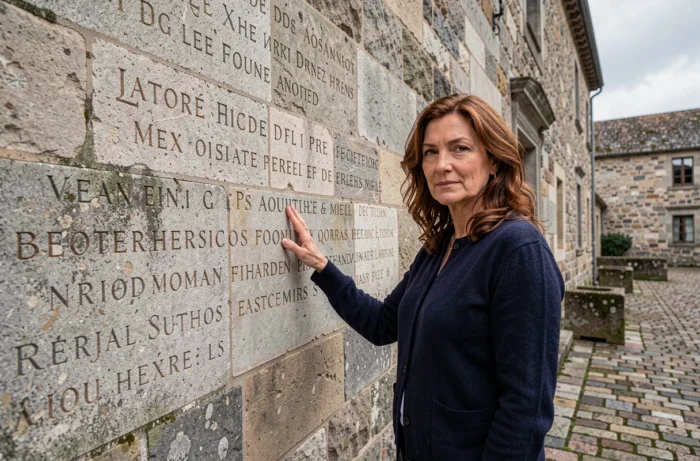
This distinction matters if you are interested in the history of the name. When it is said that Mathilde was common in the Middle Ages, it should be understood that it was primarily under the spelling Mahaut that it circulated. The form Mathilde as we know it emerged later, particularly in the 19th century, when the name returned to use after a long eclipse post-Renaissance.
The journey is therefore far from linear. We observe a name that was very present in the Middle Ages (under the form Mahaut), which faded for several centuries, then reappeared in its current spelling. This cycle of forgetting and return is typical of so-called heritage names.
Variants Across Europe
Mathilde has not been limited to France. It appears as Matilda in English, Spanish, and Swedish. Italy uses Matilde. Germany retains Mathilde, close to the original root. These variants testify to a wide diffusion from the Middle Ages, driven by dynastic alliances between European kingdoms.
Popularity of the Name Mathilde in France: What Insee Data Shows
To track the popularity of a name in France, the reference remains the Insee name file. This file lists births recorded since 1900, by name and by year, with a breakdown also available by department.
Some precautions to keep in mind:
- Insee rounds the figures to the nearest multiple of five, which means that a small difference between two years does not necessarily reflect a real trend.
- Older data (early 20th century) is less comprehensive than recent data. Comparing the frequency of Mathilde in 1910 and 2000 therefore requires caution.
- National averages mask significant geographic variations: the popularity of Mathilde can differ greatly from one department to another.
What we know for sure: Mathilde experienced a marked decline between the 1930s and the 1970s. The name then returned to favor and reached the status of one of the most given female names in France. This resurgence is part of a broader trend of rehabilitating old names, a phenomenon also observed for names like Louise, Adèle, or Jeanne.
Feast and Patron Saint
The feast of Mathilde is set for March 14, in honor of Saint Mathilde of Ringelheim, queen of Germany in the 10th century. Some sources also mention May 14. March 14 remains the most commonly retained date in French calendars.

Historical and Cultural Figures Named Mathilde
The name has been borne by several powerful women, which is not unrelated to its warrior etymology. Among the most well-known:
- Mathilde of Flanders, wife of William the Conqueror and queen of England in the 11th century.
- Mathilde the Empress (Mathilde of Normandy), who claimed the throne of England in the 12th century and led a civil war to defend it.
- Saint Mathilde of Ringelheim, wife of the German king Henry I, known for her monastic foundations.
In contemporary culture, the name remains anchored in the Francophone imagination thanks to the song Mathilde by Jacques Brel, released in 1963. Actress Mathilde Seigner has also helped keep the name in the French media space in recent decades.
These figures draw an interesting thread. Mathilde remains associated with assertive personalities, whether they are medieval queens or contemporary artists. The name carries a certain gravity, a solidity that distinguishes it from names perceived as lighter.
Choosing Mathilde today means opting for a name that is recognizable throughout Europe, rooted in a long history, and whose popularity remains stable without sudden fashion trends. Its warrior meaning, far from being an obstacle, gives it a depth that many recent names do not offer.