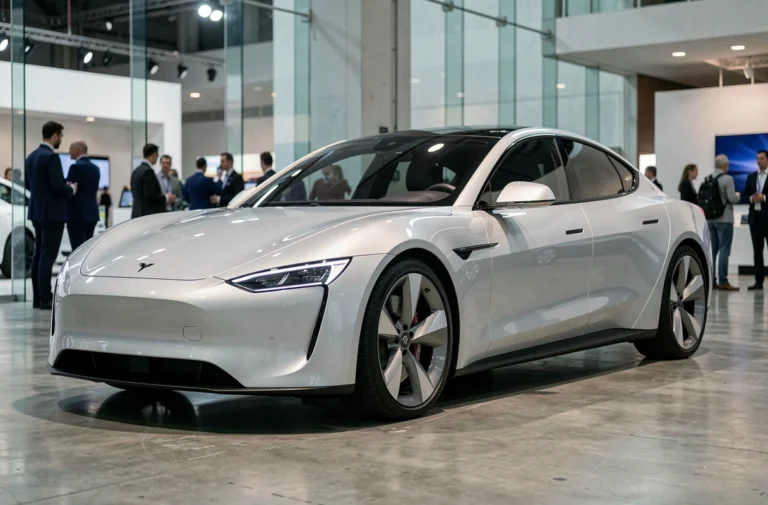
Electric cars in apartment buildings remain a blind spot in discussions about the energy transition. Between the right to install a charging point, the power limits of building risers and the still uneven coverage of public charging stations, everyday electrification looks very different depending on whether you have a private garage or share an underground car park.
Electrical capacity in apartment buildings: the real bottleneck
Even before discussing charging stations, the question is whether the building has enough electrical capacity. A building constructed in the 1970s is rarely equipped with a riser designed to supply several charging points at once. Adding a 7 kW charging point for each parking space in a 40-space car park requires infrastructure that the existing network cannot support without upgrades.
The right to install a charging point, enshrined in law, allows any occupant to request an individual charging solution. In practice, the property manager can object on serious technical grounds, and the time between the request and actual installation often stretches over several months.
Shared charging solutions (operators that equip the entire car park in exchange for a supply contract) partly sidestep the problem. But they impose a per-kilowatt-hour rate set by the operator, often higher than that of a standard residential electricity plan. For the latest technical developments on these issues, Veridictus’s automotive section regularly covers real-world experiences with these installations.

Public charging stations: everyday reliability and cost
Drivers who rely exclusively on the public network face two recurring frustrations: charger availability and the cost of each charging session. The fast-charging experience on motorways is gradually improving, but the cost per kilowatt-hour at a fast charger remains significantly higher than at home. The difference can make running costs comparable to those of an efficient petrol or diesel vehicle.
In urban areas, charging-station density varies considerably from one local authority to another. A Paris resident does not have the same coverage as someone living in a medium-sized town outside the major cities. And the term “available charging station” can mean very different things: a low-output reinforced socket, an occupied fast charger, or a broken charger with no repair date posted.
What a reinforced socket means for urban driving
For many daily drivers, a reinforced socket is enough to meet their needs for the week. Plugging the car in overnight to a Green’Up-type socket provides enough energy for a typical commute. However, smart charging schedules that could make the most of off-peak electricity rates are still uncommon among private individuals.
This technical reality helps explain why surveys of electric-vehicle owners mostly find high satisfaction among people who live in detached houses with direct access to their charging point. Extending that satisfaction to residents of apartment buildings would be misleading.
Low-emission zones: local rules, not a national timetable
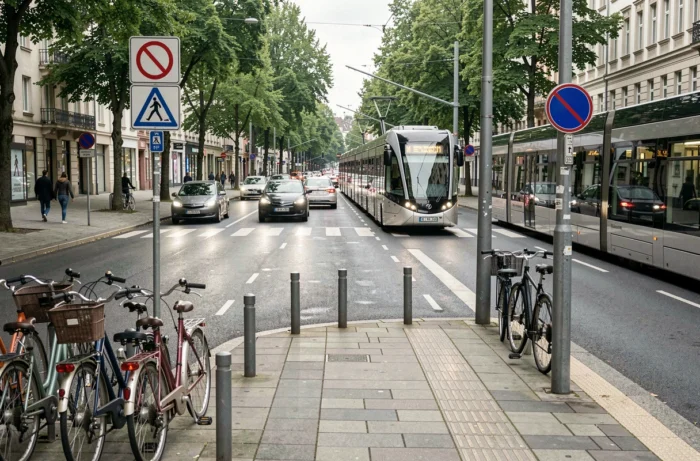
Low-emission zones (LEZs) are another factor that influences vehicle choice. Contrary to the idea of a uniform national timetable, LEZ restrictions vary by local authority. Local regulations determine the areas covered, the Crit’Air categories affected, the hours when restrictions apply and any exemptions.
This patchwork of regulations makes buying decisions more complicated. A Crit’Air 3 vehicle may be allowed to circulate freely in one urban area and banned in the next. For drivers travelling between several major cities, the rules remain difficult to navigate.
- LEZ boundaries do not always cover the entire urban area: some outlying districts remain accessible to the oldest vehicles.
- Temporary exemptions (for professionals, classic vehicles or medical circumstances) vary from one local authority to another, with no national standardisation.
- Enforcement remains limited in most cities, creating a gap between the rules as published and how they are applied in practice.
Social leasing and access to electric vehicles: promise versus availability
Social leasing was intended to make electric cars accessible to lower-income households, with capped monthly payments. The scheme attracted considerable interest, but the initial order target was not met, partly because only a limited number of models qualified and delivery times were extended.
This tension between political ambition and industrial reality highlights a structural problem. Manufacturers prioritise higher-margin segments, while affordable compact electric models remain scarce in European catalogues. Social leasing brought this gap into focus without resolving it.
What to consider when choosing an electric car for constrained urban use
For drivers without a private garage, the decision comes down to a few very practical factors:
- How close and reliable public charging stations are within walking distance of home, which can be checked using dedicated mapping apps.
- Whether the vehicle is compatible with slow charging (a reinforced socket or shared charging point). This means prioritising models whose onboard chargers can handle low power without degrading the battery.
- Real-world range in winter urban driving, which is significantly lower than official figures and should be weighed against the distance actually driven each day.
- The total cost of public charging relative to annual mileage, compared honestly with the fuel budget for a recent petrol or diesel vehicle.
Driving electric while living in an apartment is not impractical, but it does require planning that a petrol or diesel car does not. Check your building’s situation, map the charging stations you can access and calculate the true extra cost of public charging before signing: these steps are far more important to a successful switch to electric than the range quoted on the spec sheet.