
A sofa that’s showing its age, dull walls, a room that no longer feels like anything in particular: the need for a change is real, but the budget doesn’t always stretch far enough. Adapting a contemporary decorating project to your actual means means separating the changes that truly transform a space from those that eat into your budget without making a visible difference. And when your home is energy-inefficient, the question gets more complicated: should you focus on appearances or insulation first?
Decorating and energy efficiency: the decision no one makes at the outset
Thinking of redoing your living room, but your home has an EPC rating of F or G? Regulatory deadlines matter more than your choice of paint. Homes rated G have been banned from the rental market since January 2025, and those rated F will be affected from 2028.
For a landlord, investing in contemporary decor before addressing energy efficiency is like putting wallpaper over a damp wall. Insulation, ventilation and window replacement work aren’t cosmetic improvements: they’re requirements for meeting energy-efficiency standards.
Before setting your renovation budget in stone, check whether a recent change to the EPC calculation method has affected your home’s rating. Some owners find that their property has moved to a different rating without any work being done, simply because the calculation was updated. This could free up some of the budget originally set aside for energy-efficiency upgrades.
In practice, advice from a contemporary decorating professional can help you distinguish aesthetic spending from technical work and make informed choices without wasting money.
Decorating on a budget: where to spend for real impact
The usual impulse is to buy lots of small decorative items: candles, cushions, picture frames. The result is often a scattered, incoherent look, with the budget spread across dozens of little purchases.
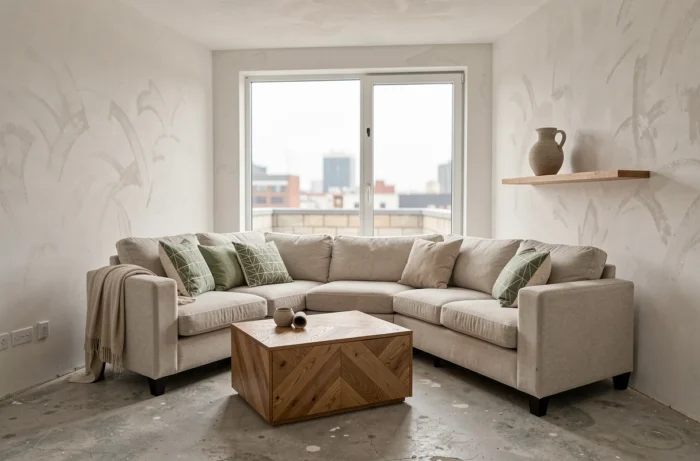
One well-chosen piece of furniture can transform a room more than twenty accessories. The principle is simple: focus your budget on the things you notice first when you walk into the room. Usually, that’s the sofa, coffee table or main light fixture.
Features with the biggest visual impact
- Wall coverings or paint color: a contemporary shade (sage green, terracotta, warm off-white) can change the feel of a room without replacing any existing furniture. A can of paint costs relatively little compared with the effect it creates.
- Lighting: replacing a central ceiling light with two or three light sources (a table lamp, pendant light, reading lamp) creates the kind of atmosphere magazines call “layered lighting.” It’s a technical term for combining light at different heights.
- Statement textiles: a generously sized rug visually anchors a space. A rug that’s too small makes the furniture look as though it’s floating.
Avoid buying everything at once. Spread your purchases over two or three months so you can see how each addition works in your day-to-day life before moving on to the next.
Secondhand furniture and reuse: a targeted option, not a miracle solution
Buying secondhand seems like an obvious way to cut costs. The market tells a more nuanced story. In 2025, nearly three out of four people in France bought or sold at least one secondhand item across all categories. Secondhand furniture, however, accounted for just 1.4% of the market in 2023.
In practical terms, finding a Scandinavian-style sideboard or a solid oak table secondhand is possible, but it takes time and patience. Secondhand shopping works better for statement pieces than for everyday purchases.
Reuse centers and social enterprises
Peer-to-peer platforms aren’t the only option. Social and solidarity economy organizations accounted for more than 63% of products reused or repurposed across six extended producer responsibility sectors in 2023. Reuse centers often offer furniture that’s already been cleaned and sometimes restored, at prices lower than those listed online.
For a contemporary decorating project on a tight budget, pairing one key new purchase (a sofa, for example) with smaller secondhand pieces from a reuse center can create a cohesive look without breaking the bank.

Renter or homeowner: tailor your decorating project to your situation
Homeowners can paint, drill holes and change flooring. Renters must return the property to its original condition unless the landlord agrees otherwise. This restriction can completely change your decorating strategy.
If you’re renting, prioritize reversible changes. Here are a few practical examples:
- Removable wallpaper on a single feature wall instead of repainting the whole room.
- Shelving mounted on rail systems that leave few marks when removed.
- Large houseplants: a sizeable fiddle-leaf fig or monstera can make as much of a decorative impact as a corner cabinet, without drilling a single hole.
For landlords, the approach is the opposite. The goal is to make the property appealing while keeping costs under control. A simple, contemporary interior (light walls, neutral flooring, understated but modern light fixtures) appeals to a wide range of tenants and keeps the cost of refreshing the property between tenancies down.
If the property has an EPC rating of E, start planning now for the 2034 deadline. Include the cost of energy-efficiency work in your overall plan rather than treating decorating and renovation as two separate budgets. An artisan or interior designer with expertise in both areas can help you avoid having to redo the same walls twice.
Your decorating budget doesn’t exist in a vacuum. It depends on whether you own or rent, the home’s energy efficiency and how long you plan to live there. Considering these three factors before opening a single catalog is the most cost-effective decision you can make for your project.