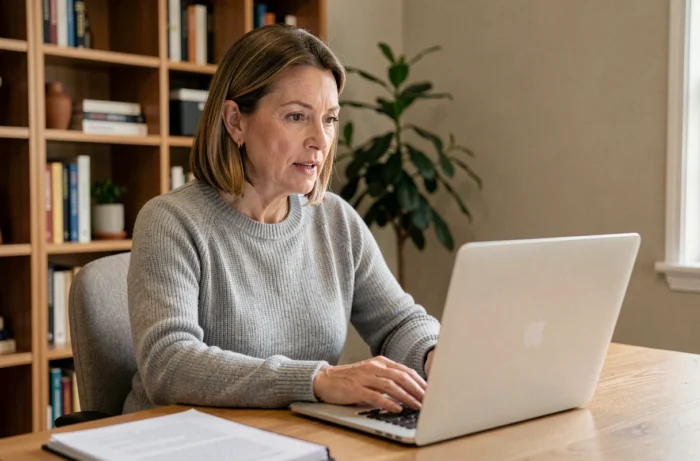
Medical teleconsultations now account for a stable but limited share of general practitioners’ activity in France. Uptake varies depending on patients’ age, where they live and how comfortable they are with digital technology. Understanding these differences helps clarify what this type of consultation can actually offer—and where it falls short.
Teleconsultations and in-person appointments: what the figures show
Comparing teleconsultations with in-person appointments using practical criteria helps put the two formats into perspective without judging one against the other. The table below brings together data from the French regulatory framework and findings published by DREES and the Fondation de l’Avenir.
| Criterion | In-person appointment | Teleconsultation |
|---|---|---|
| Clinical examination | Palpation, auscultation, measurements (blood pressure, etc.) | Visual observation and verbal exchange only |
| Time to get an appointment | Varies; sometimes several weeks in areas with limited medical coverage | Often shorter; sometimes same-day appointments on certain platforms |
| Health Insurance reimbursement | Standard coverage when following the coordinated care pathway | The same, provided the coordinated care pathway is followed (referring doctor or referral) |
| Main user groups | All age groups | More common among younger and urban patients |
| Geographic accessibility | Depends on the local density of healthcare providers | Available anywhere with an internet connection |
The table highlights a point that is often overlooked: reimbursement is the same in both cases, provided patients follow the coordinated care pathway. The difference lies elsewhere—in the type of examination and the profile of patients who use each format.
Resources on online medical care and teleconsultations explain these coverage requirements and their practical implications in more detail.
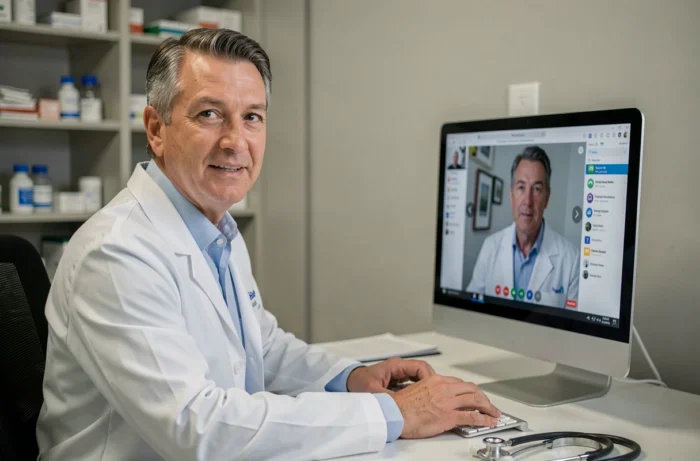
The digital divide and teleconsultations: unequal access for patients
The Fondation de l’Avenir notes that digital skills are a barrier to access in their own right. Older people and those less familiar with digital tools can sometimes be excluded from the service, even though they could benefit from it because of reduced mobility.
This divide is not just about access to devices. Navigating a teleconsultation platform, finding an appointment slot and preparing digital copies of health records all require familiarity with interfaces that not every patient has.
The geographic paradox
Teleconsultation is often presented as a solution to medical deserts. Available data paint a more nuanced picture. According to DREES, people living in large urban centres use teleconsultations more often than those in rural areas with too few doctors.
Several factors help explain this gap:
- Internet coverage remains uneven across the country, with dead zones and poorly served areas making video calls difficult
- Teleconsultation booths in pharmacies and health centres are not available everywhere
- Awareness of the service and its reimbursement conditions also varies between population groups
The technology does not automatically eliminate inequalities in access to healthcare. Instead, it shifts some of them into inequalities in access to digital services.
Clinical limitations of medical teleconsultations
The lack of a physical examination is the most significant constraint of remote consultations. A doctor cannot listen to a patient’s chest, palpate or measure their blood pressure over a video call. This is no minor limitation: some symptoms require physical contact to be assessed properly.
Teleconsultations work well for prescription renewals, monitoring stable chronic conditions, interpreting test results or getting an initial opinion on mild symptoms. They have limitations when it comes to abdominal pain, skin lesions that need to be palpated, or respiratory symptoms that call for auscultation.
The risk of underassessment
The French National Council of the Medical Association regulates teleconsultations through specific professional conduct rules. Doctors must be able to refer patients for an in-person appointment if they believe remote care is not sufficient. This referral requirement is an important safeguard, but it depends on the practitioner’s ability to identify, through a screen, situations that cannot be handled remotely.
The decree of 13 September 2018 brought teleconsultations into the standard healthcare system. It stipulates that, for the appointment to be reimbursed under the coordinated care pathway, the doctor must know the patient—meaning the patient must have had at least one in-person appointment with them in the previous twelve months, subject to certain exceptions.

Preparing for a teleconsultation: what can make a difference
The quality of a teleconsultation depends largely on what the patient prepares beforehand. Without a physical examination, the doctor relies more heavily on the information provided and the verbal exchange.
- Gather digital copies of health records before the appointment, including current prescriptions, recent test results and photos of lesions or visible symptoms
- Check that the internet connection is stable and test the camera and microphone a few minutes before the appointment
- Choose a quiet, well-lit place so the doctor can see the patient more clearly if needed
- Write down questions and symptoms in advance, as remote consultations are often shorter than in-person appointments
The patient’s consent must be obtained at the start of the session. The consultation is documented through a report and digital prescription, with the platform used required to meet health data security standards.
A teleconsultation is a medical act in its own right, subject to the same prescribing and medical confidentiality obligations as an in-person appointment. Its suitability depends on the reason for the consultation and on the patient’s ability to provide the information needed for a diagnosis. This match between the reason for the appointment and the format determines, from one consultation to the next, whether remote care offers a real benefit or whether it is better to visit a doctor’s office.