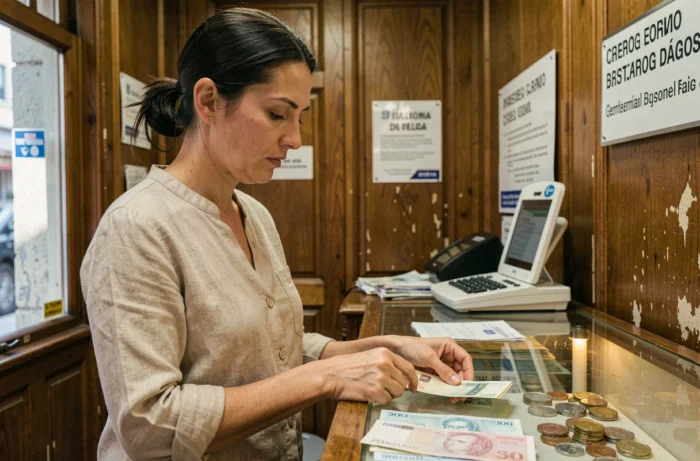
Gibraltar officially uses the Gibraltar pound (GIP), a currency issued by the local government and pegged at par with the British pound sterling. This territory of a few square kilometers located at the southern tip of Spain also accepts euros and British pounds in some of its businesses. This coexistence of three currencies in such a small space creates concrete situations that French travelers often underestimate, particularly regarding the conversion rates applied at the counter.
Gibraltar Pound and British Pound: A Parity That Hides a Trap on Return
The Gibraltar pound is worth exactly one British pound. On-site, both circulate interchangeably in most shops, restaurants, and ATMs. Gibraltar notes are issued by the Government of Gibraltar, not by the Bank of England, which creates an invisible legal difference as long as one remains in the territory.
The problem arises when leaving Gibraltar. Gibraltar notes are generally not accepted in the UK, despite their identical value. A traveler who moves on to London after a stopover in Gibraltar risks ending up with unusable notes in British businesses.
As detailed by the travel site Actualités Voyages, this distinction between the two issues of pounds is one of the lesser-known monetary peculiarities of the territory. The simplest solution is to request Bank of England notes when withdrawing from the ATM or to spend GIP notes before leaving the Rock.

Paying in Euros in Gibraltar: Where It Works and Where It Doesn’t
The immediate proximity to Spain leads many Gibraltar businesses to accept euros. Shops on Main Street, tourist restaurants, and some leisure providers sometimes display prices in both currencies. This acceptance remains a voluntary business practice, not a legal obligation.
Public offices and the Royal Gibraltar Post Office do not accept euros. This point practically limits the use of the European currency for certain expenses during the stay. A traveler who only has euros might find themselves stuck for a postage stamp or an administrative service.
The conversion rate applied by merchants who accept euros constitutes another blind spot. Each establishment sets its own rate, often less favorable than the interbank rate of the day. The difference can represent several percentage points on each transaction, an additional cost that accumulates over purchases.
Situations Where the Euro Is Refused or Penalizing
- Postal services and government offices: payment exclusively in pounds (GIP or sterling)
- Small shops outside tourist areas: random acceptance, unfavorable exchange rate when possible
- ATMs: they dispense pounds, not euros, making the issue of currency exchange inevitable for holders of eurozone accounts
Bank Card in Gibraltar: Exchange Fees and Currency Choice at the Terminal
Visa and Mastercard are accepted in the vast majority of Gibraltar businesses. Paying by card seems to be the most practical solution for a French traveler, but it involves a mechanism that is rarely explained: the choice of currency at the time of payment.
When a payment terminal detects a foreign card, it sometimes offers to charge in euros rather than pounds. This mechanism, known as dynamic currency conversion (DCC), applies a rate set by the merchant or their payment provider. This rate is almost always less advantageous than that of your bank.
Declining the conversion to euros at the terminal and paying in pounds remains the best option in most cases. The issuing bank of the card will then apply its own exchange rate, generally closer to the interbank rate. Some banks also charge a fee on transactions in foreign currencies, which is worth checking before departure.
Withdrawals at ATMs: What to Anticipate
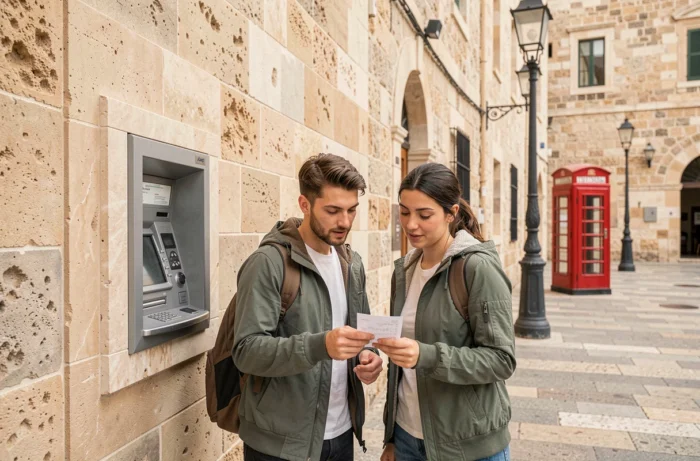
Gibraltar ATMs dispense pounds (GIP or sterling depending on the machine). Each withdrawal in foreign currency can incur two types of fees: the fixed fee from the local ATM and the exchange fees from the cardholder’s bank.
Limiting the number of withdrawals by opting for higher amounts reduces the impact of fixed fees. Multi-currency cards offered by some providers allow you to load sterling in advance and avoid conversion fees for each transaction.
Budget and Currency Exchange Strategy for a Stay in Gibraltar
The choice of currency depends on the duration of the stay and the type of expenses planned. For a day visit from Spain, using a bank card to pay in pounds at the terminal covers most needs without requiring prior exchange.
For a stay of several days, combining two payment methods offers more flexibility:
- A bank card with reduced exchange fees (multi-currency card or card with no commission on foreign currency payments) for everyday purchases
- A small amount in sterling (Bank of England notes) for situations where the card is not accepted or for public services
- Avoid carrying euros as the main currency: their acceptance remains partial and the rate applied in cash is rarely competitive
Exchanging euros for pounds before leaving France is rarely advantageous, as exchange offices at the airport or in the city apply significant margins. Withdrawing on-site at an ATM, with an appropriate card, often remains the least costly option.
GIP notes obtained on-site should ideally be spent before leaving the territory. Exchanging them in France is a challenging process, as most exchange offices do not handle this currency.