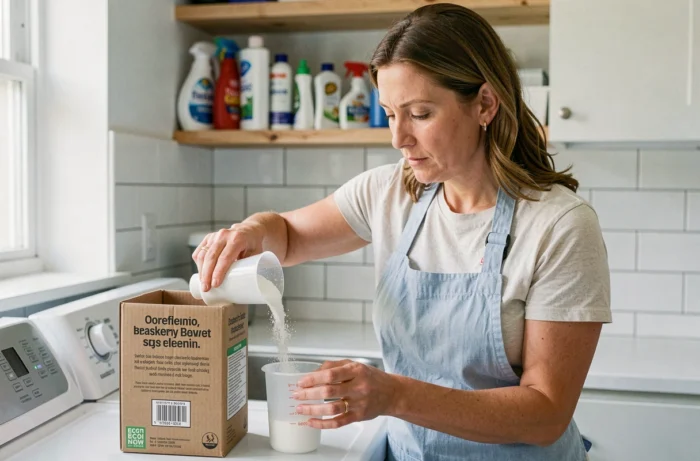
A grayish deposit in the hose, a struggling drain pump, a lingering smell in the drum: technicians who take washing machines apart often find the same residue. The detergent you choose plays a direct role in clogged pipes.
Switching to a soap-free powder detergent limits the formation of this residue, but not under all conditions. Water hardness, the amount used and the wash temperature matter just as much—and sometimes more—than the product’s ingredients.
Water hardness and soap: how pipes get clogged
Have you ever noticed a whitish film on the walls of your shower or sink? This deposit forms when limescale dissolved in water reacts with grease. The same thing happens inside your washing machine.
Soap, including Marseille soap, contains glycerin and fatty acids. When they come into contact with hard water, these fatty substances form insoluble residue. It coats the hoses, the bottom of the tub and the drain pump. The harder the water, the thicker the layer becomes with each cycle.
A soap-free detergent eliminates this specific reaction. It contains no grease that could react with limescale. Choosing a soap-free powder detergent therefore reduces the main source of this sticky residue in the washing machine’s internal pipes.
Keep in mind, however, that this does not mean all clogging problems will disappear. Other factors also come into play.
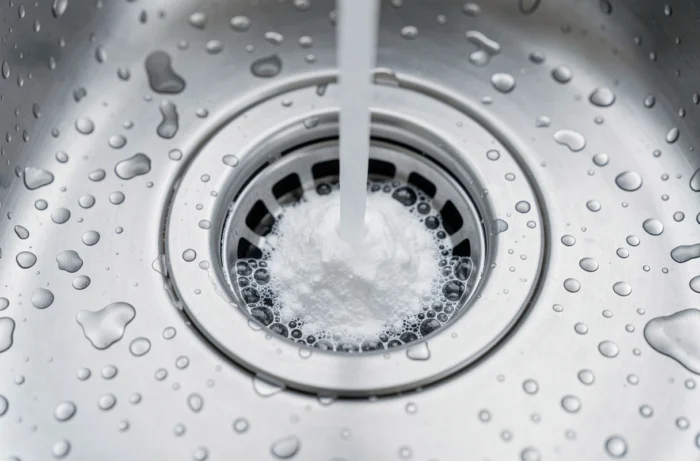
Detergent dosage and wash temperature: two underestimated factors
Removing soap from the formula is not enough if the dosage or wash program is unsuitable. Powder that is incorrectly dosed or used at a low temperature can leave residue in the drum and pipes, regardless of its quality.
Using too much detergent: the most common pitfall
Adding more detergent does not make your laundry cleaner. The excess does not dissolve completely and settles in the drainage system. Cycle after cycle, this buildup forms a layer that eventually narrows the internal pipes.
The right amount depends on three factors: the size of the load, how dirty the laundry is and the water hardness. That is why dosage instructions are provided on the packaging. Using a quarter less when the laundry is only lightly soiled can prevent a lot of buildup.
Why temperature matters as much as the detergent
Powder dissolves better in hot water. At 30 °C, it may only dissolve partially, especially formulas containing washing soda crystals or sodium percarbonate. Undissolved grains can settle in the nooks and crannies of the machine.
- Below 40 °C, choose a very fine powder designed for cold cycles, or check that your detergent dissolves completely in a glass of warm water before use.
- Running a cycle at 60 °C at least twice a month, even with an empty drum, helps liquefy grease and residue that have built up in the internal pipes.
- Alternating cold and hot cycles helps limit buildup without damaging delicate laundry during everyday washing.
Soap-free powder detergent: what it actually changes inside your pipes
The main advantage of soap-free powder lies in the type of cleaning agents it contains. Instead of soap (a surfactant derived from fats), these formulas use synthetic surfactants or alkaline agents such as washing soda crystals and sodium percarbonate.
These ingredients dissolve in water without forming greasy deposits, even in hard-water areas. They do not react with calcium ions in the same way as soap. The result: less sticky residue in the hoses and drain pump.
Powder also has a practical advantage over liquid detergent: its consistency. Liquid detergents often contain thickeners and preservatives that leave a film in the detergent drawer and injection channels. Once dissolved, powder does not leave this kind of film.
One important point to remember: soap-free powder protects pipes better than powder containing soap, but correct dosing is still essential. The format is not everything; dosage and temperature remain key factors.
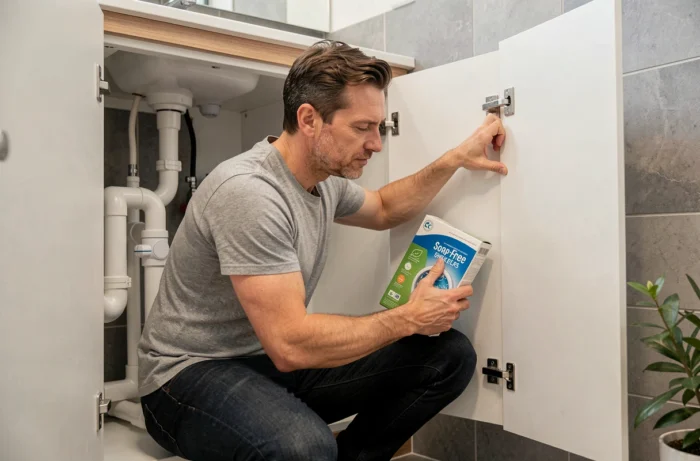
Washing machine maintenance: additional steps to take alongside using soap-free detergent
Choosing the right detergent addresses part of the problem. The rest comes down to routine maintenance of the machine itself.
- Clean the drain pump filter every two months. This is where textile fibers mix with traces of undissolved detergent and build up.
- Wipe the door seal after each use. Trapped moisture encourages mold and odors, regardless of the type of detergent.
- Run an empty cycle at 90 °C once every three months, adding two tablespoons of washing soda crystals to the drum. This cleaning cycle dissolves residual grease in the pipes.
- Leave the washing machine door ajar between uses to let the inside dry.
Fabric softener makes buildup worse. Its oily texture settles in the same areas as soap residue. Reducing or eliminating fabric softener enhances the protective effect of soap-free detergent.
European detergent regulations: a framework in development
The Swedish Chemicals Agency reports that new European regulations on detergents are in the works. They are not yet in force and do not currently impose any direct obligations on consumers. They aim to impose stricter controls on the composition of laundry products, particularly their biodegradability and their impact on wastewater systems.
This future framework does not certify that any particular detergent is harmless to pipes. It does, however, confirm that detergent ingredients are receiving increasing regulatory attention. Choosing a soap-free formula now, using the right amount and matching it to your water hardness, lets you get ahead of this trend without waiting for legal requirements to take effect.
Choosing soap-free powder detergent reduces one major cause of pipe deposits: the reaction between soap and limescale. But it is not a standalone solution. Correct dosage, wash temperature and regular machine maintenance all add to this protection. Even a suitable product will not protect your pipes if you use it incorrectly.