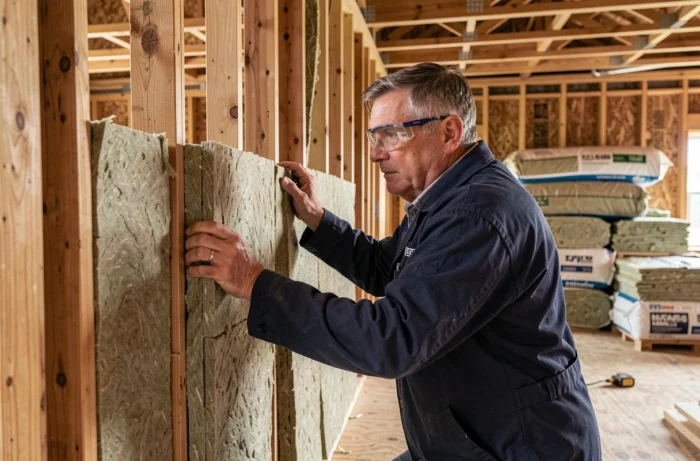
A home rated F or G on the Energy Performance Certificate (DPE) has more than just high heating bills to contend with. It overheats in summer, lets damp in during winter and has poor ventilation all year round. Energy-efficient renovation aims to address all three issues at once, rather than one at a time.
Since 1 July 2025, the decree governing subsidised major renovations has required an improvement of at least two energy rating classes and work on at least two parts of the building envelope. Insulating a single wall or replacing a boiler is no longer enough to qualify for grants. This framework encourages homeowners to plan their work as a coherent whole.
Prioritising work based on the DPE rating and summer comfort
Have you ever noticed how an apartment under the roof becomes unbearable as soon as June arrives, yet freezes in January? Homes like this face two urgent problems: heat loss through the roof in winter and radiant heat causing overheating in summer. Addressing one without the other solves only half the problem.
Regulatory documents relating to grants now identify work specifically aimed at improving summer comfort. In practical terms, this means that solar shading and loft insulation count just as much as replacing the heating system when calculating energy savings.
For landlords, the pressure is twofold. The energy-efficiency standards for rental properties are being phased in, progressively banning the rental of energy-inefficient homes. Renovation is therefore part of a compliance timeline, as well as a way to improve occupants’ comfort. Specialist providers can support this comprehensive approach, as shown by https://www.3ehabitat.fr, which brings together several trades involved in renovation.
How do you decide where to start? An energy audit identifies the areas that consume the most energy. But you should also observe the home under real-life conditions: note which rooms overheat in summer, feel for cold walls in winter, and check whether the ventilation still works properly after any previous airtightness work.
Thermal insulation and ventilation: two inseparable projects
Improving insulation without addressing ventilation creates an airtight home that can no longer breathe. Moisture builds up, mould appears and air quality deteriorates. Thermal comfort may improve on paper, but quality of life suffers.
The decree governing major renovations sets efficiency and performance criteria for mechanical ventilation with heat recovery systems. This is no coincidence: compromising indoor air quality in the name of thermal comfort is a common pitfall.
The role of mechanical ventilation with heat recovery
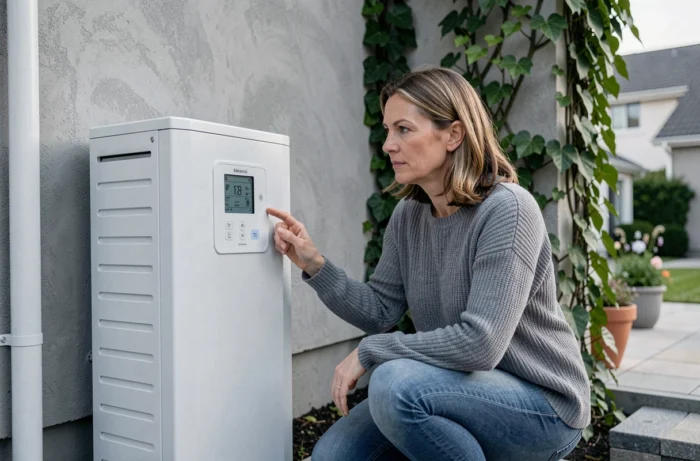
A mechanical ventilation with heat recovery (MVHR) system recovers heat from outgoing air to preheat incoming air. In winter, this limits heat loss from air renewal. In summer, some models include a bypass that lets cool night air in without passing it through the heat exchanger.
Combining insulation and ventilation delivers measurable benefits:
- Insulating the walls and roof reduces heat transfer with the outdoors, helping to stabilise indoor temperatures throughout the day
- Mechanical ventilation with heat recovery renews the air without creating cold draughts or heat loss, maintaining good air quality
- External solar shading (shutters, brise-soleil) prevents direct sunlight from heating the walls, complementing internal insulation
Each measure delivers only partial benefits on its own. It is their combination that makes a home comfortable all year round.
Heating and hot water: choosing the right system after insulation
A common mistake is to replace the boiler first. A poorly insulated home needs a high heating output. If you insulate it afterwards, the new system will be oversized, less efficient and more expensive to run.
Professionals recommend following a specific order: first reduce energy needs through insulation and ventilation, then adapt heat generation to those lower needs. An air-to-water heat pump or a combined solar heating system, for example, performs better in a building that is already energy-efficient.
Which system is right for your home?
The choice depends on the building’s layout and its existing heat distribution system. Here are a few pointers:
- A home with hot-water radiators is well suited to an air-to-water heat pump, which can replace the boiler without changing the heating circuit
- A house with good sun exposure can use solar thermal panels to provide some of its domestic hot water
- An apartment in a shared-ownership building is often limited to individual solutions (air-to-air heat pump, thermodynamic water heater), unless the property management company launches a collective multi-year renovation plan
Sizing the heating system after insulation prevents oversizing and reduces the overall cost of the project.
Recalculated DPE ratings and financial assistance: what changes in practice
The recalculation of the coefficient applied to electricity in the DPE has changed the energy rating of some electrically heated homes, even though no work has been carried out. A home rated F may move up to E, changing the landlord’s obligations and eligibility for grants.
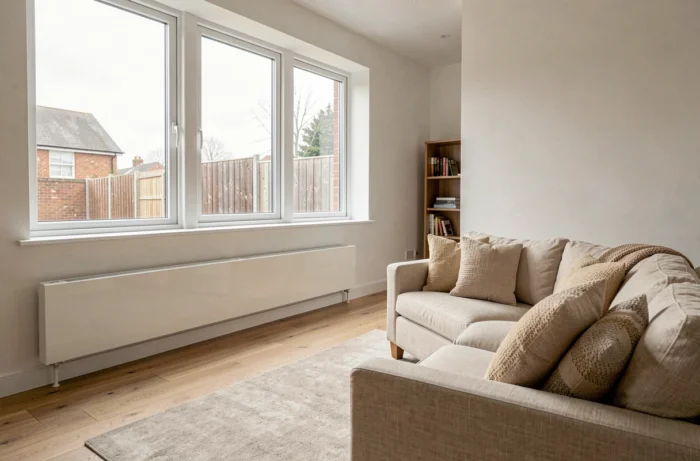
This reclassification should not become an excuse to put off renovation work. A better DPE rating on paper does nothing to improve occupants’ actual comfort. The walls are still cold, the windows still develop condensation, and the home still overheats in summer.
Current grants, particularly MaPrimeRénov’, prioritise major renovations that address several areas at once. To qualify, projects must achieve a two-class improvement and cover at least two parts of the building envelope. Financing must therefore be built around a comprehensive project, not a series of small, isolated measures.
A home renovated as a coherent whole gains in property value, everyday comfort and regulatory compliance. All three outcomes depend on the same starting point: an honest assessment, a logical sequence of work and measures carried out together rather than separately.