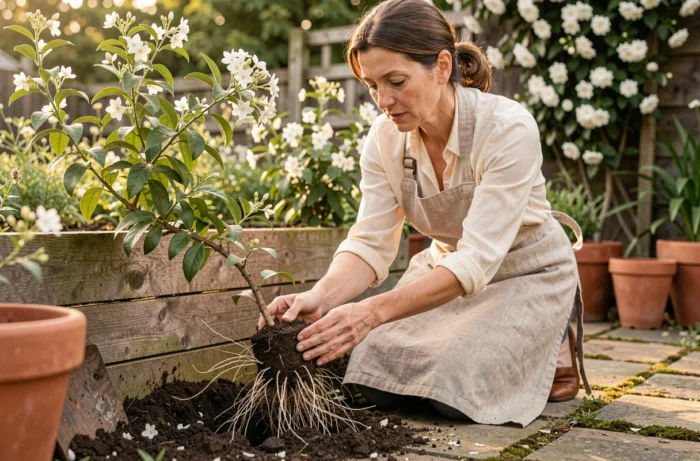
A jasmine with yellowing leaves doesn’t always need more water. Sometimes its roots are suffocating in overly wet soil, and the instinct to water more only makes things worse. Understanding how jasmine roots work helps you avoid this common pitfall and build the foundations for long-term growth, whether in the ground or in a pot.
Waterlogged or dry soil: diagnosing a struggling jasmine
Have you ever noticed a jasmine with limp, yellowing leaves and wondered whether the problem was too much or too little water? Both situations produce similar symptoms, but the causes are opposite.
A jasmine that needs water has dry, brittle leaves. When you push a finger a few centimetres into the soil, it feels hard and powdery. The plant curls its leaves to limit evaporation.
A jasmine whose roots are sitting in water has yellow, limp leaves, sometimes accompanied by a sour, earthy smell. The soil remains sticky and wet below the surface. Deprived of oxygen, the roots gradually rot.
Push a finger or a stick ten centimetres into the soil before watering. If the soil sticks and remains wet, don’t add water. It’s better to loosen the soil around the base with a garden fork, taking care not to damage the roots, to restore airflow. This simple check prevents most watering mistakes with jasmine.
By learning about the depth of jasmine roots, you can see that root growth varies by species and container, which directly affects how you manage watering day to day.
Jasmine roots in the ground and in pots: two different realities
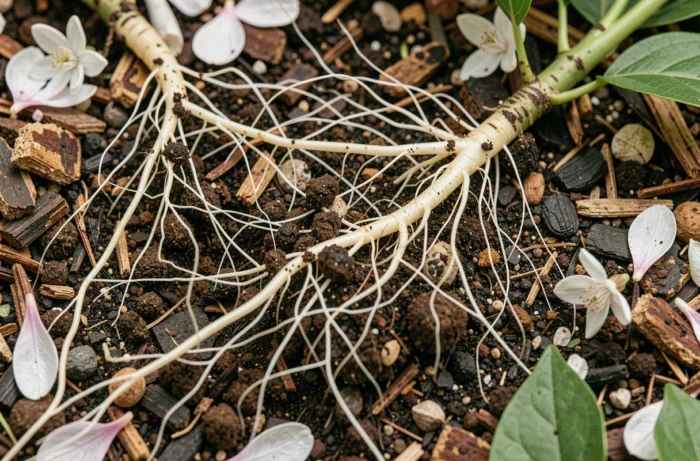
Common jasmine (Jasminum officinale) develops a fairly extensive root network when grown in the ground. Its roots seek water deep below the surface and spread sideways to anchor the climbing plant to its support.
In a pot, things are different. The amount of soil is limited, the roots circle around themselves, and potted roots are far more exposed to frost than roots in the ground. A pot left on a balcony in winter doesn’t benefit from the ground’s thermal mass. Wrapping the container in horticultural fleece protects the root system when temperatures drop.
Jasmine and star jasmine: a common mix-up
Star jasmine (Trachelospermum jasminoides) isn’t a true jasmine. It belongs to a different botanical family. Its roots, evergreen foliage and hardiness differ from those of Jasminum.
- Jasminum officinale has deciduous foliage and roots that tolerate a range of soil types, provided they are well drained.
- Trachelospermum jasminoides keeps its leaves year-round and develops vigorous roots, but it is even more sensitive to waterlogged soil, where its roots rot quickly.
- Winter jasmine (Jasminum nudiflorum) is the most tolerant: its roots adapt to heavier soils, and it copes better with partial shade.
Choosing the right species for your soil type can prevent a lot of disappointment. Clay soil that retains water is better suited to winter jasmine than to star jasmine.
Preparing the soil to encourage jasmine root growth
Good drainage is the key to success. A jasmine planted in soil where water sits after every rainfall will eventually struggle, even if the light and pruning are ideal.
Test the drainage before planting in the ground. Dig a hole about the size of a bucket and fill it with water. If it takes more than an hour to drain, the soil holds too much moisture. You have two options: add coarse sand and compost to the bottom of the planting hole, or choose a slightly raised spot.
For potted plants, drainage holes in the bottom of the container are essential. A layer of clay pebbles or gravel at the bottom helps water drain away. Use a light potting mix blended with sand rather than compact garden soil.
When to plant jasmine for good root growth
Spring is still the best time to plant. The plant has several warm months to develop its roots before winter. Planting in autumn can work in regions with mild winters, but a jasmine planted too late in the season won’t have time to establish properly before the first frosts.
After planting, water regularly for the first few weeks. The soil should stay moist but not waterlogged. Once the jasmine is well established (usually after its first full growing season), it becomes more self-sufficient and can tolerate short periods of drought.
No flowers in the first year: the role of the roots
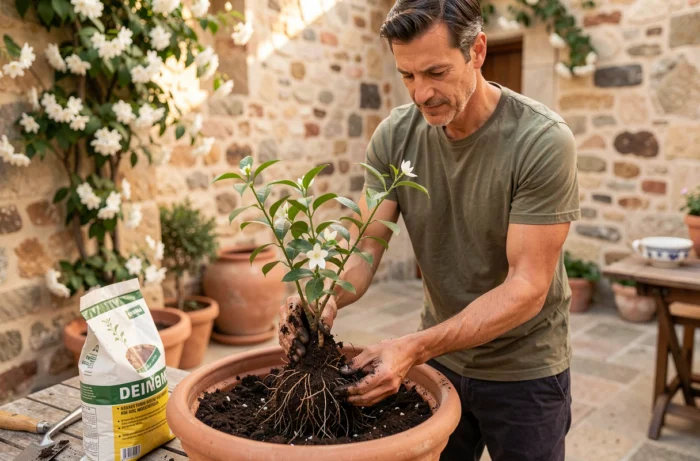
A recently planted jasmine that doesn’t flower isn’t necessarily unhealthy. The plant puts its energy into establishing its roots before producing flowers. This is normal and doesn’t mean you should add excessive amounts of fertiliser.
Check the light and watering first before adding nutrients. A jasmine that gets too little direct sunlight will put its energy into foliage rather than flowers, even if its root system is healthy.
If it still hasn’t flowered after two growing seasons, check the soil. A growing medium that is too rich in nitrogen encourages leaf growth at the expense of flowers. Applying a balanced fertiliser in spring corrects this imbalance without stressing the plant.
Layering is a way to propagate a thriving jasmine without disturbing its roots. Lay a stem on the ground, partially cover it with soil, and let it develop its own roots before separating it from the parent plant. This method is more reliable than taking cuttings, which have varying success rates depending on the jasmine species.
A jasmine with well-established roots in well-drained soil, planted at the right time and in a sunny spot, ultimately needs little attention. The secret lies less in watering than in the quality of the soil around the roots.