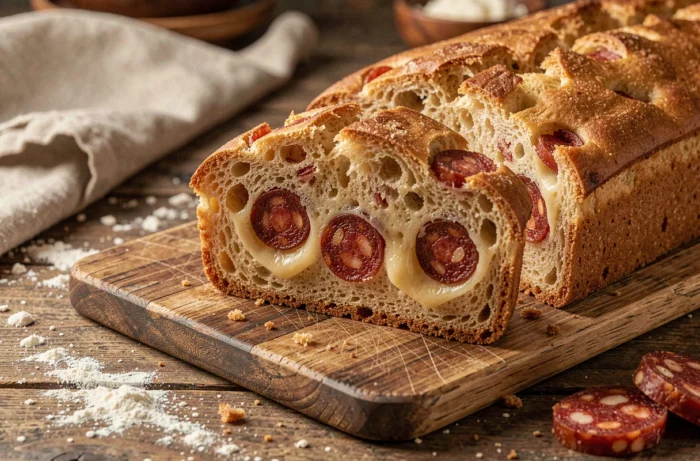
A chorizo loaf cake that crumbles when sliced or sticks to the roof of your mouth is often the result of getting the fat balance wrong. Chorizo releases fat as it cooks, and that changes everything if you don’t account for it. A moist, flavorful texture depends less on the recipe itself than on three techniques you can use before you even turn on the oven.
Fat from the chorizo and fat in the batter: the balance that changes the texture
Have you ever noticed a layer of oil at the bottom of the pan after baking? It comes from the chorizo. As it heats up, it releases some of its fat, which seeps into the batter and throws off the balance the recipe was designed to achieve.
If you add your usual amount of oil without accounting for the fat released by the chorizo, the crumb will turn heavy and dense. On the other hand, cutting back too much on the oil will make the cake dry, because the fat from the chorizo isn’t distributed evenly.
The solution is to fry the chorizo before adding it to the batter, then drain it on paper towels. This quick step in the pan does two things: it removes excess fat and creates a light golden crust on each piece, preventing the chorizo from releasing more fat into the batter as it bakes.
Once the chorizo has been drained, you can measure out your olive or sunflower oil as usual without risking an overly greasy crumb. If you’d like to explore this approach further, the secrets to a successful chorizo loaf cake explain the balance between fats in detail.
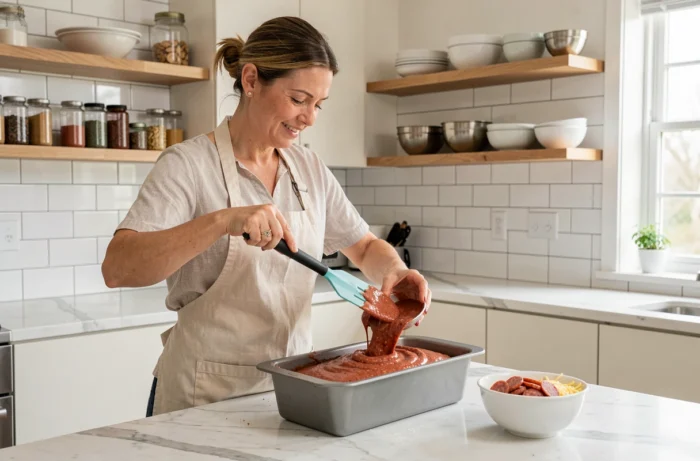
Mixing savory loaf cake batter: when to stop
In sweet baking, you’re often told not to overwork the batter. For a savory loaf cake, this is even more important because the add-ins (chorizo, cheese, olives) already make the batter heavier.
When you mix the flour and baking powder with the eggs and milk, the flour’s gluten starts to develop. The more you mix, the more elastic and dense the crumb will be. For a moist cake, stop as soon as the flour is incorporated, even if a few lumps remain.
The well method
Make a well in the center of the dry ingredients. Pour in the beaten eggs, milk, and oil. Mix from the center outward with a spatula or wooden spoon, folding the batter over itself.
About 20 strokes is enough. The batter will still be slightly uneven, and that’s normal. Any remaining lumps will disappear as it bakes.
Adding the filling without letting it sink to the bottom
Toss the chorizo pieces and any olives in a tablespoon of flour before adding them to the batter. This thin coating creates a little grip, keeping the pieces suspended instead of letting them sink to the bottom of the pan.
Add the filling last and fold it in with just three or four strokes to distribute it. Every extra stroke activates the gluten and makes the heavier pieces sink.
Baking a chorizo loaf cake: temperature and signs it’s done
Baking often makes the difference between a moist cake and a dry, tough one. Two common mistakes are using an oven that’s too hot, which sets the outside before the center is cooked, and leaving the cake in longer “just to be safe.”
- Preheat the oven to 180 °C (fan-assisted if possible) to ensure even baking without drying out the edges.
- Place the pan in the middle of the oven, never near the top. Direct heat from above creates a thick crust that traps moisture unevenly.
- Check for doneness with a knife from the 40-minute mark. The blade should come out with a few moist crumbs, not completely clean. A savory loaf cake continues to cook for several minutes after it comes out of the oven.
- Leave the cake in the pan for at least 10 minutes before turning it out. This resting time allows the crumb to set and makes it easier to slice cleanly.
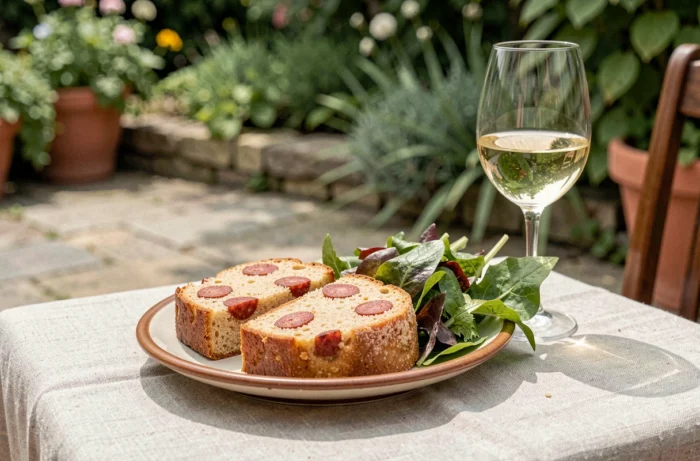
Ingredient swaps for a moister chorizo loaf cake
Replacing some of the milk with full-fat yogurt adds both acidity and fat. The acidity reacts with the baking powder, producing a little more carbon dioxide and making the crumb lighter.
These adjustments make a real difference to the texture:
- Use plain full-fat yogurt in place of half the milk. The crumb will feel denser but stay moister and won’t crumble.
- Add grated cheese (Gruyère, Comté) to the batter, not just on top. The cheese melts and creates pockets of fat that help retain moisture as the cake cools.
- Dice a bell pepper and cook it separately before adding it to the batter. Raw pepper releases too much water as the cake bakes, leaving soggy patches. Sautéed pepper adds moisture without making the batter too wet.
Mild chorizo makes for a crowd-pleasing cake, while hot chorizo adds a kick without changing the texture. It’s a matter of taste, not technique.
How to store the cake without losing its moist texture
A chorizo loaf cake left out in the open for a few hours will dry out on the surface. Wrap it in plastic wrap once it has cooled. It will keep at room temperature for up to 24 hours without any problem.
After that, store it in the refrigerator. Take it out about 30 minutes before serving so the crumb can soften again, or warm the slices in a low oven for a few minutes.
Freezing works well if you slice the cake first. Individual slices thaw faster and more evenly than a whole loaf, so you won’t end up reheating a half-thawed cake until it turns rubbery.